Get started with a free inspection. We’ll identify the problem and recommend the best solution—no obligation.

Spider Control in Snohomish County

Pest Near provides spider control in Snohomish County, focused on reducing spider activity, removing webs and egg sacs, and keeping spiders out of the home through targeted exterior and interior treatments.

We treat common house spiders, giant house spiders, and other nuisance species found in Western Washington homes. Spider activity picks up in late summer and early fall, when spiders move toward homes looking for warmth and food.

Serving homeowners and small commercial properties throughout Snohomish County, including Everett, Lynnwood, Mukilteo, Mill Creek, Edmonds, Marysville, Lake Stevens, and Snohomish, as well as nearby Bothell and Shoreline.

Why Spiders Are So Common in Snohomish County

Our mild, damp climate keeps insects around most of the year, and where there are insects, there are spiders. Most of the spiders we find in local homes are harmless, but nobody wants webs across the porch light or a giant house spider running across the living room in September.

Spiders almost always start outside and work their way in, so a single spray rarely keeps them away for long. When we treat a home, we focus on:

  • Knocking down webs and egg sacs around eaves, windows, and entryways
  • Treating the cracks, gaps, and sheltered spots where spiders hide
  • Reducing the insects that draw spiders to the house in the first place
  • Pointing out openings where spiders are getting inside

That’s why spider control in Snohomish County usually works best as ongoing service rather than a one-time visit.

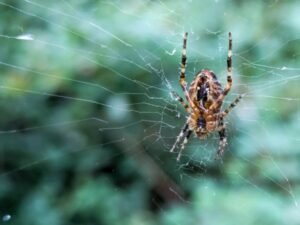
Spider sitting in the center of its web outdoors.

COMMON SPIDERS WE TREAT

Knowing which spider you're dealing with tells us where to look and how to treat. Here's what we run into most:

  • Giant house spiders: the big, fast ones that show up indoors in late summer and fall, usually in basements, garages, and along baseboards.
  • Common house spiders: build tangled cobwebs in corners, garages, and window frames.
  • Orb-weaver spiders: spin the large, round webs across porches, eaves, and gardens, especially in late summer.
  • Cellar spiders ("daddy longlegs"): hang in loose webs in basements, crawl spaces, and ceiling corners.
  • Jumping spiders: small, fuzzy spiders often seen on sunny walls and windowsills.
HOW OUR SPIDER CONTROL WORKS

Professional pest inspection service

Inspection & Assessment

We evaluate spider activity, web buildup, entry points, and environmental conditions contributing to spider presence.
Integrated pest management service

Web Removal & Targeted Treatment

Services include removal of existing webs and targeted treatments to exterior eaves, entry points, and other areas where spiders commonly harbor.
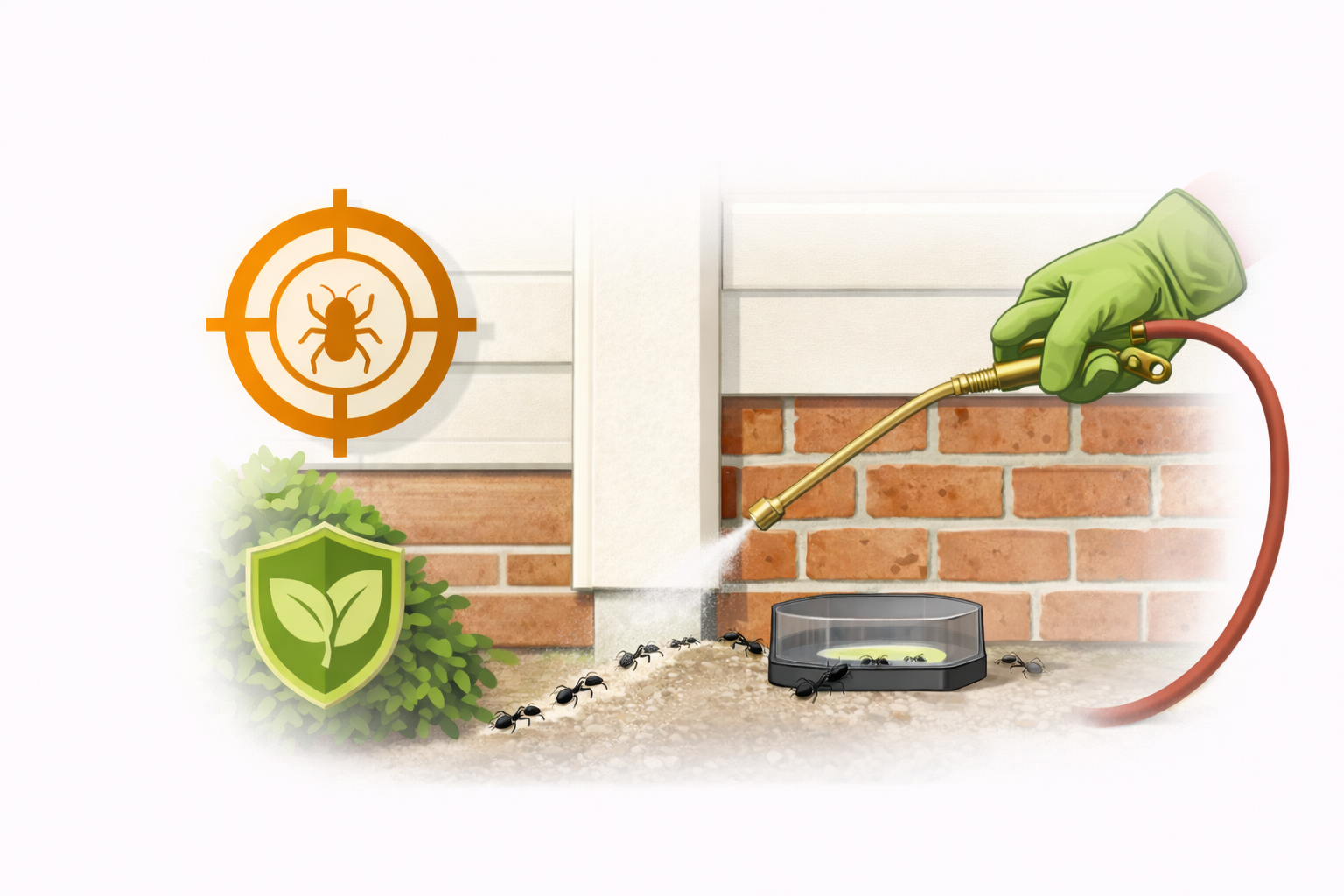
Targeted treatment

Ongoing Prevention & Monitoring

Routine service visits help reduce spider activity over time by addressing new web buildup, limiting insect attractants, and reinforcing exclusion measures.
Professional pest control service documentation

Documentation & Communication

After each visit, you’ll receive clear documentation outlining findings, services performed, and recommendations.

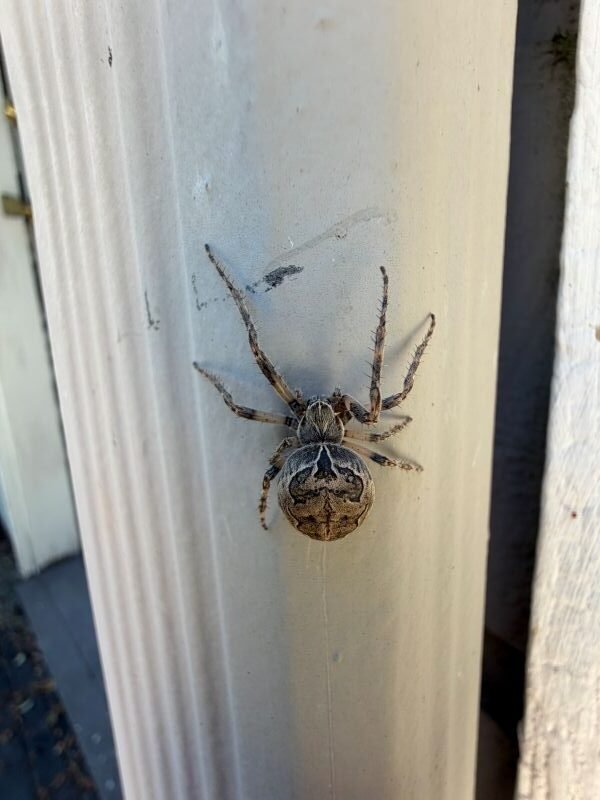
Spider Control & Web Removal in Snohomish County

Most spider problems we see aren’t about one spider. It’s the webs that keep coming back along the eaves, porch lights, window frames, and garage doors, sometimes within days of being cleared. Treating only the spiders you can see doesn’t do much. The best way to control spider populations is to treat where they hide, clear webs and egg sacs, and reduce the insects that keep drawing them to the house.

Are Spiders in Snohomish County Dangerous?

For the most part, no. Most spiders we find in local homes, including giant house spiders, are nuisance pests rather than a health concern, and spiders rarely bite people. Dangerous spiders are uncommon in this part of the state. Black widows are mostly found in Eastern Washington, and only small populations exist on the west side. The all-black false black widow is far more common here and is often mistaken for the real thing. If you’re not sure what you’re seeing, we’ll identify it during your inspection.

Ongoing Spider Control

Spiders start outside and keep moving in from the surrounding area, so a one-time treatment usually gives only temporary relief. For most homes, a recurring service plan is the best way to control spiders and the other insects that draw them in. Because each visit also treats the bugs spiders feed on, you get broader protection around your home instead of just a cleanup after the fact. We offer monthly, bi-monthly, and quarterly service, depending on how much pressure your property sees.

  • Exterior treatments: applied around the foundation, eaves, windows, and entry points where spiders and the insects they feed on gather.
  • Web and egg sac removal: a single egg sac can hold dozens to hundreds of eggs, so we clear webs and sacs from eaves and entryways at each visit to keep the next generation from hatching around your home.
  • Ongoing monitoring: we watch for changes in spider and insect activity and adjust treatment as the seasons shift.

Who Spider Control Is Best For

Spider control is a good fit if:

  • Webs keep coming back on your eaves, porch, or windows, even after you clear them
  • Your home backs up to woods, water, a greenbelt, or open space
  • You’re tired of knocking down webs every weekend
  • You want ongoing prevention instead of a quick fix that wears off

Spider Control Throughout Snohomish County

We do spider control all over Snohomish County, including Everett, Lynnwood, Mukilteo, Mill Creek, Edmonds, Marysville, Lake Stevens, and Snohomish, plus Bothell and Shoreline.

We’re a family-owned business based in Everett, so the people we work for are our neighbors. An older house with a crawl space in North Everett doesn’t get treated the same way as a newer home backing up to a greenbelt in Mill Creek, and we don’t pretend it does. Live in Everett? Here’s more on our spider control in Everett.

Pest Near shield

FREQUENTLY ASKED QUESTIONS

Spiders enter homes primarily pursuing food, shelter, and favorable indoor conditions. A high indoor spider population signals an underlying infestation of prey insects like flies, ants, or moths, combined with unsealed entry points like door gaps and torn screens.

To get rid of spiders, eliminate their food source, seal entry points, and vacuum webs. Use silicone caulk around windows and foundations, remove active webs and egg sacs with a vacuum attachment, and reduce indoor insects to force spiders elsewhere.

Yes, professional pest control effectively eliminates and reduces spiders through targeted barriers and prey reduction. Exterminators use micro-encapsulated treatments on entry points and eradicate underlying insect populations, cutting off the spiders' primary food supply to ensure long-term control.

Tired of Recurring Web Buildup?

Ready to Get Started?

Get an online quote, or schedule a FREE inspection.

Speak with our team to determine the best next step.

We’ll identify the issue, explain what’s going on, and recommend the right solution.